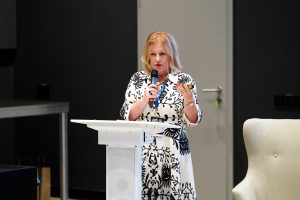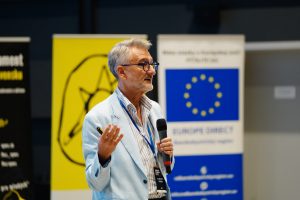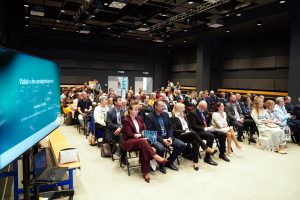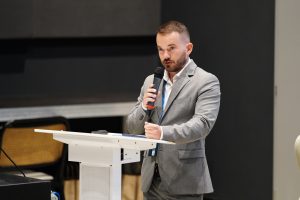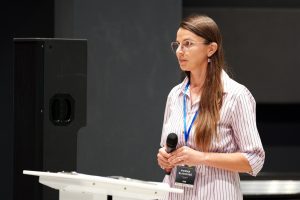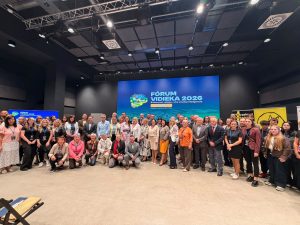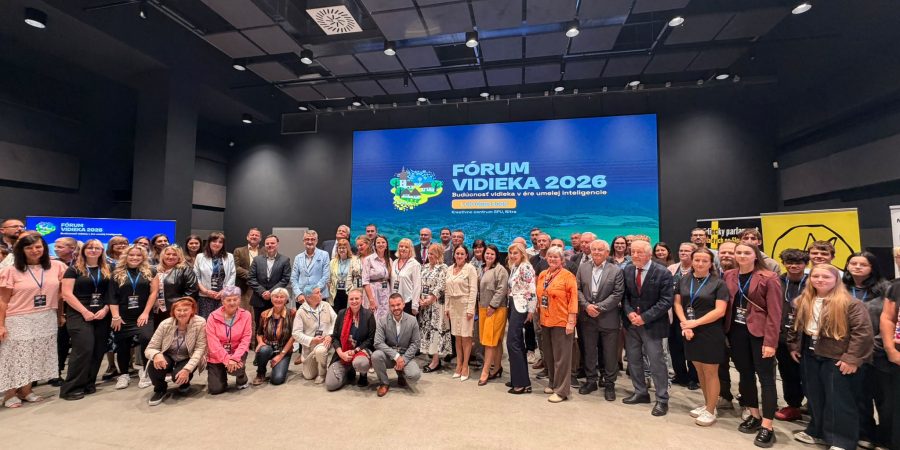
On 1 October 2026, around 100 participants gathered at the Slovak University of Agriculture in Nitra, Slovakia, for the XIV Rural Forum, focused on the theme “The Future of Rural Areas in the Age of Artificial Intelligence: Opportunities, Risks and Recommendations for Practice and Policy.”
The Forum was organised by the Rural Parliament in Slovakia (VIPA SK), a member of the PREPARE network, together with its partners. It brought together representatives of municipalities, public administration, agriculture, business, research, education and civil society from across Slovakia.
The aim was to look beyond AI as a technology and discuss what it could mean in practice for rural communities: better services, more efficient administration, modern agriculture and new economic opportunities, but also risks linked to digital exclusion, data protection, cybersecurity, employment and social cohesion.
Expert contributions
The programme included a series of expert presentations:
- Vladimír Šucha – The Future of Society in the Age of Artificial Intelligence
- Juraj Buzalka – Rural Areas Between Tradition and Technological Transformation
- Zuzana Palková – Artificial Intelligence in Agriculture and Food Systems
- Michal Kaliňák – Rural Areas in a Dynamic Era
- Patrik Haburaj – Risks of Artificial Intelligence for Rural Communities
Practical examples were also presented by:
- Alena Minns – digital skills and the Digital Start initiative,
- Izabela Michelčíková – the regional Farmer Challenge initiative and regional food systems,
- Martin Balko – the use of AI in education and entrepreneurship.
Four working groups
A central part of the Forum was the work in four thematic groups:
- AI, people, education and intergenerational cooperation
The group discussed AI literacy, lifelong learning, digital inclusion, intergenerational learning, new skills and the importance of maintaining human relationships and community life. - AI, agriculture and food systems
Participants explored precision and regenerative agriculture, automation, climate adaptation, innovation and the practical use of digital tools by farmers. - Smart municipalities and public services of the future
The group focused on digital public services, data management, cybersecurity, digital sovereignty, shared services and ways to make local administration more efficient. - The future of rural policies and financing
The discussion addressed the future EU programming period 2028–2034, rural proofing, the long-term vision for rural areas, LEADER, local development and financing for the green and digital transition.
The groups were asked to identify key opportunities and risks, formulate practical recommendations, identify responsible actors and propose concrete steps and expected results.
Final panel discussion
The Forum concluded with a panel discussion entitled “How can we ensure that AI serves rural development?”, moderated by Eva Mihočková.
The panel included:
- Róbert Palider, Chair of the Association of Young Farmers in Slovakia – ASYF,
- Karel Charvát, Plan4all / Czech Center for Science and Society,
- Zuzana Palková, Slovak University of Agriculture in Nitra,
- Juraj Buzalka, Comenius University in Bratislava.
The discussion focused on human oversight of AI, responsible use of data, digitalisation of agriculture and public services, and the need to ensure that innovation does not deepen inequalities between rural and urban areas or between different groups of citizens.
The overall Forum programme was moderated by Monika Slaninová.
Recommendations from the Forum
At the end of the event, Jakub Dvorský from the Rural Youth Parliament in Slovakia summarised the outcomes of the four working groups and presented a common framework of recommendations.
The main recommendations included:
- develop practical AI and digital literacy in rural areas;
- use AI to reduce administrative burdens for municipalities, farmers, businesses and citizens;
- improve access to integrated public services while avoiding digital exclusion;
- strengthen data sovereignty, transparency and cybersecurity;
- support responsible digitalisation of agriculture, while preserving practical farming knowledge;
- strengthen inter-municipal cooperation and functional micro-regions;
- introduce rural proofing, so that the impact of public policies on rural areas is systematically assessed;
- simplify and stabilise rural funding after 2027, including support for smaller local projects and integrated territorial solutions.
The Forum also linked these recommendations to the broader debate on the future EU programming period 2028–2034and the long-term development of rural areas towards 2040.
A key message emerged clearly throughout the day:
Artificial intelligence should serve people, communities and rural areas – not replace them.
The XIV Rural Forum in Slovakia showed that the future resilience of rural territories will depend not only on technology, but also on strong communities, skilled people, cooperation between municipalities and public policies that respond to the real needs of rural areas.